Automated Testing Infrastructure for a Cybersecurity SaaS Platform
How we took Caylent from zero test coverage to a fully automated QA pipeline.
90%
Test Coverage
50%
Faster Deployments
3x
Fewer Production Bugs
0
Manual Testing Dependencies
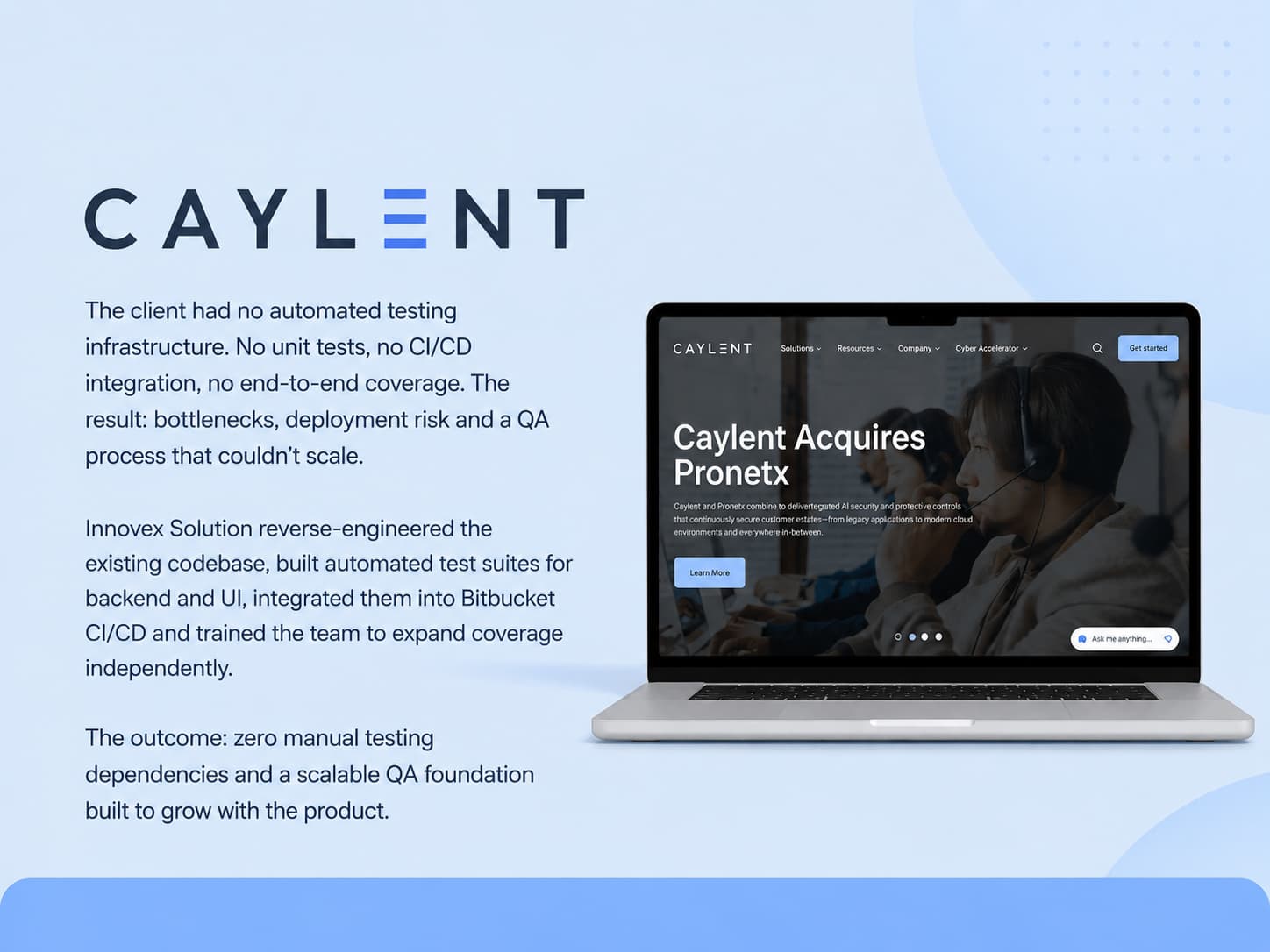
The Client
Caylent is a cybersecurity SaaS platform whose engineering team was shipping releases without any automated safety net.
The Challenge
Caylent had no automated testing infrastructure. No unit tests, no CI/CD pipeline — every release relied on manual checks, which meant slower deployments and a higher risk of bugs reaching production.
The Solution
We reverse-engineered the existing codebase, built automated test suites from the ground up, and integrated everything into a Bitbucket CI/CD pipeline so tests run automatically on every push.
How It Works
From zero coverage to a reliable release pipeline.
Codebase Audit
We analyzed the existing codebase to map out critical paths and identify where testing gaps posed the biggest risk.
Test Suite Development
Built automated unit, integration, and end-to-end tests module by module, without disrupting ongoing development.
CI/CD Integration
Integrated the test suite into Bitbucket CI/CD so every push triggers automated checks before deployment.
Team Training
Trained the Caylent engineering team to maintain and extend the test suite independently going forward.
Tech Stack
FAQ
Common questions about this project
What condition was the codebase in before you started?
There was no automated testing and no CI/CD pipeline in place. Every release relied on manual checks, which meant slower deployments and a higher risk of bugs reaching production.
How long did it take to reach 90% test coverage?
We approached it in phases — auditing the codebase first, then building out unit and integration tests module by module, so the team always had a working pipeline rather than a long gap with no releases.
Did the team need to change how they worked day to day?
Yes, but minimally. Once the Bitbucket CI/CD integration was in place, tests just run automatically on every push. We also trained the team so they could maintain and extend the test suite themselves.
What testing tools were used and why?
Selenium for end-to-end testing, Jest for unit tests, and Docker to keep test environments consistent across the team. This combination gave solid coverage without adding unnecessary complexity.
Can this same setup be applied to other SaaS platforms?
Absolutely. The approach — codebase audit, phased test suite development, CI/CD integration, and team training — is a repeatable process we use for any platform lacking automated testing.
Ready When You Are
This is what we can build for you.
If your platform needs a reliable testing and deployment pipeline, we should talk.